
Paul Szpak is currently accepting applications from prospective graduate students to join the Trent Environmental Archaeology Lab. Students should apply for the Department of Anthropology's M.Sc. program or the Environmental & Life Sciences (EnLS) graduate program (Ph.D.). It is crucial that you contact Paul first and discuss potential ideas for projects before applying to the graduate program in advance of the application deadline. The deadline to apply for a graduate program is typically January or February 1, but the Trent Graduate Studies website should be consulted. There are occasionally opportunities available for students to complete undergraduate thesis projects. Students interested in an undergraduate thesis should contact Paul before the end of their third year.
Our lab conducts a very high volume of research and there are always new and unexpected projects for students to work on beyond the core areas highlighted below. All student projects involve stable isotope analysis. Previous experience is not necessary, but a desire to learn is essential. For a more complete picture of the kinds of research projects that students complete, refer to the Current Team and Alumni pages.

Agricultural Practices in Peru and Chile
Applying stable isotope analysis to macrobotanicals remains from archaeological sites allows us to understand how people managed their crops, specifically the extent to which they fertilized their plants and whether they provided them with supplemental water through irrigation.
Past and Present Students:

Animal management practices in Peru and Chile
Stable isotope analysis applied to animal bones, teeth, and other tissues has provided us with tremendous insight into how people managed domestic animals, especially llamas and alpacas in Peru and Chile. We can learn whether animals were local or imported from other regions, and understand how products made from animal products (especially textiles) were exchanged across the landscape.
Past and Present Students:
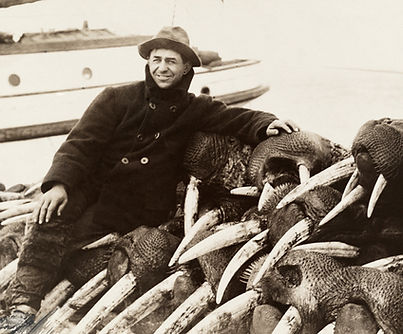
Historical and palaeoecology of Arctic animals
Using stable isotopes of animal bones and teeth from archaeological sites, palaeontological sites, natural history collections, and recently collected specimens, TEAL members are helping us to better understand how the Arctic environment has changed over the last few thousand years. We particularly focus on the diet, habitat use, and life history of marine and terrestrial mammals.
Past and Present Students:

Human Palaeodiet and Palaeomobility
By applying multiple different stable isotope markers, students have assessed the diets of past human populations as well as aspects of their life history, particlarly their likely place of origin. Students have worked on such projects in Peru, Alaska, Turkey, Ontario, and Quebec.
Past and Present Students:
Rachel Dickenson (Northern Alaska)

Methodological Studies Related to Archaeological Applications of Stable Isotopes
Our lab makes it a priority to emphasize developing methods that produce the best results with the least amount of sample destruction. We do this by rigorously testing every aspect of our protocols.
Past and Present Students:

Understanding Geographic Variation in Sulfur and Strontium Isotopes
Some isotopes vary in their distribution across the landscape as a result of geological and other environmental factors. We are particularly interested in better understanding how sulfur and strontium isotopes vary across the landscape, collecting environmental samples to generate isoscapes (spatial representations of isotopic variation).
Past and Present Students:
Amy Thompson (Sardinia)
Moses Akogun (Mongolia)
Nuri Aydemir (Turkey)

Stable Isotopes and Decomposition
Organic materials undergo changes as they decompose, potentially altering their stable isotope composition. Students are currently working on projects to better understand how human tissues undergo isotopic shifts during decomposition, as well as how decomposition impacts the stable isotope compositions of insect larvae that feed on these tissues.
Past and Present Students: